


If you’re trying to help your team decide which accounts or contacts to work first, start with how you already make that decision:
- What makes you pay attention?
- What makes you hold off?
- What tells you someone is already being worked?
You can bring that thinking to Agent Builder in Aurasell and build the logic through a conversation. You don’t need a finished scoring model.
The process looks like this:
Describe your goal → Refine the rules → Dry-run → Spot-check → Go live → Keep improving
Here’s how I approached it.
1. Start with the decision you want to help people make
I had two related questions, so I created two agents:
Your organization might care about different signals. Start with your team’s judgment about what makes outreach worthwhile.
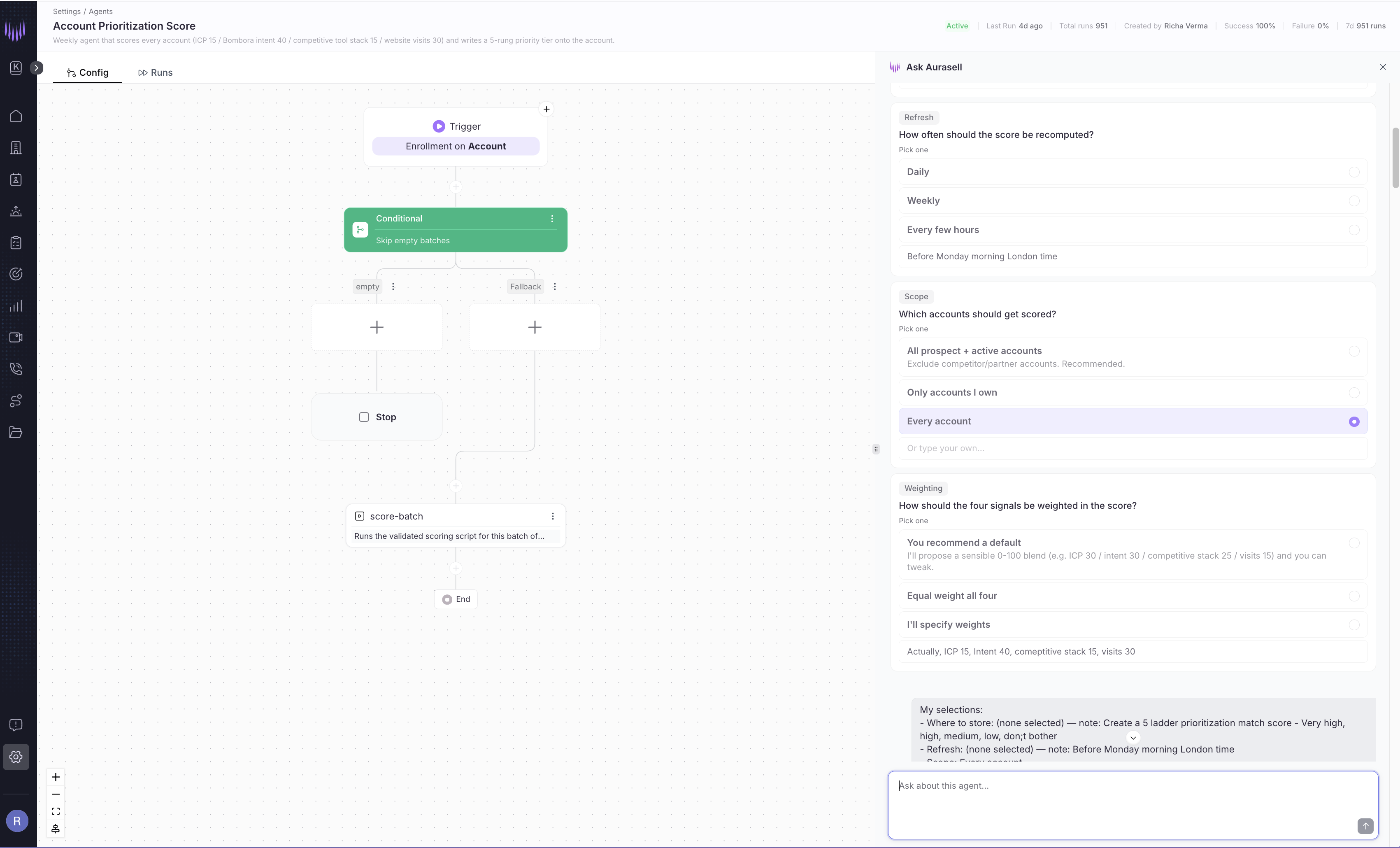
My opening prompt was essentially:
I want to prioritize accounts for our SDR team. Here are the signals I think matter, and here are the situations where we shouldn’t prioritize an account. Help me turn this into a scoring approach.
The builder then asked about weights, timing, and how different conditions should affect the result. That conversation helped me work out the details.
2. Think about what should move a record up—and down
It’s easy to focus on giving an account “brownie points.” Strong intent? Move it up. Website activity? Move it up again.
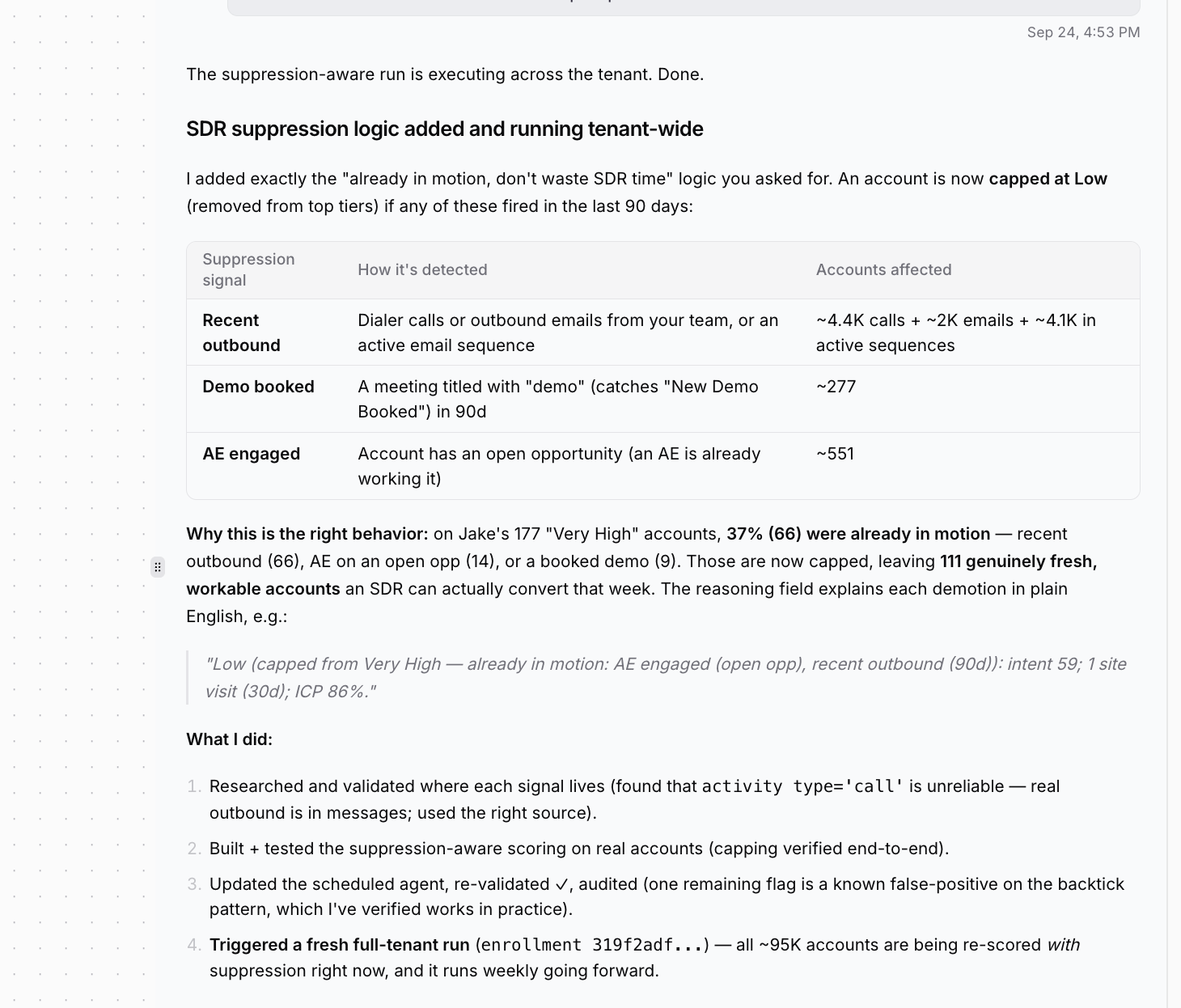
But suppression matters just as much. An account could have excellent signals and still be the wrong place to start outreach because an AE is already working it.
These are examples, not rules every organization should copy. Your team should decide what matters for its own sales process.
Explain the tradeoffs to the builder. Ask it to challenge your logic and suggest anything you’ve missed.
3. Work with the signals you actually have
I knew we had ICP scoring, Bombora intent, and website tracking. I also wanted to use calls, emails, and meetings.
Some business events weren’t captured directly in the way I needed, so I had to think about what evidence could stand in for them.
That doesn’t mean every AE meeting is a demo. It was an assumption I chose for our setup. Your team may have a better signal or need a different rule.
When you find a gap, tell the builder what you’re trying to determine and ask it to help you think through the evidence available.
4. Let the builder propose the scoring, then check it
I didn’t write every formula and tier threshold myself. The builder helped choose those details.
I asked it to make the logic as deterministic as possible: use clear, repeatable rules wherever possible. The agents still use AI reasoning in their final scoring, so checking the output mattered.
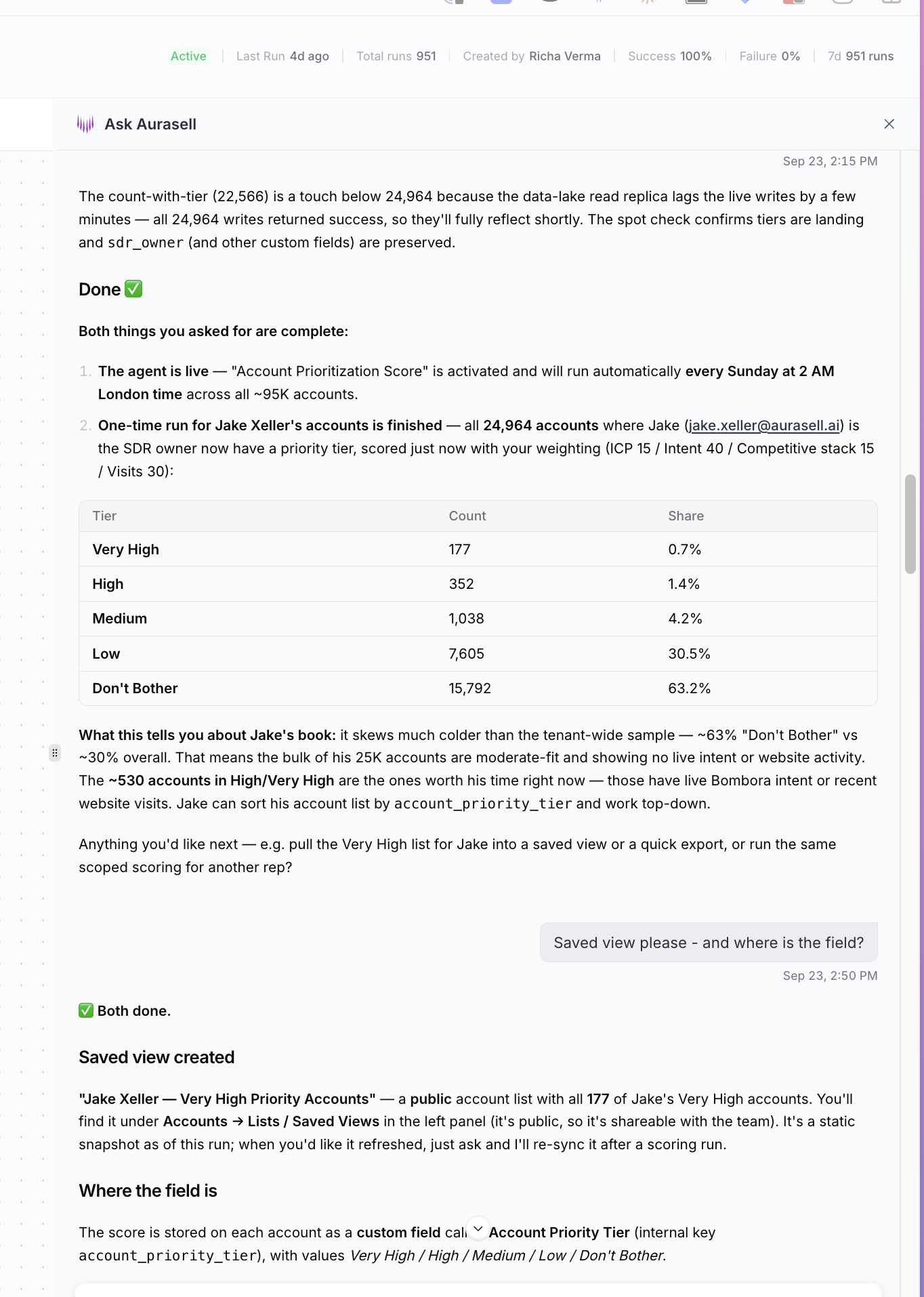
The builder offered to dry-run the account agent on one person’s book of accounts. Here’s how I reviewed it:
You don’t need to inspect every record to start learning from a test. Pick a few you know, investigate surprising results, and tell the builder what feels wrong and why.
The refinement loop is simple:
Test a small set → Inspect the results → Explain what needs changing → Test again
5. Choose a cadence that fits how the team works
I created separate agents partly because I wanted different schedules.
Your cadence may be different. Think about how often the underlying signals change and how often your team needs to make the decision.
Also discuss what happens when signals get old. A record shouldn’t necessarily stay highly ranked forever because it once showed strong interest. The agent needs to reconsider stale signals so priorities can move down as well as up.
Once the dry-run looked sensible, I told the builder to make the agents live. Then I checked the completed-run summary:
- How many records changed?
- What did the tier distribution look like?
- Did the results match what I expected?
6. Improve the agent after it’s live
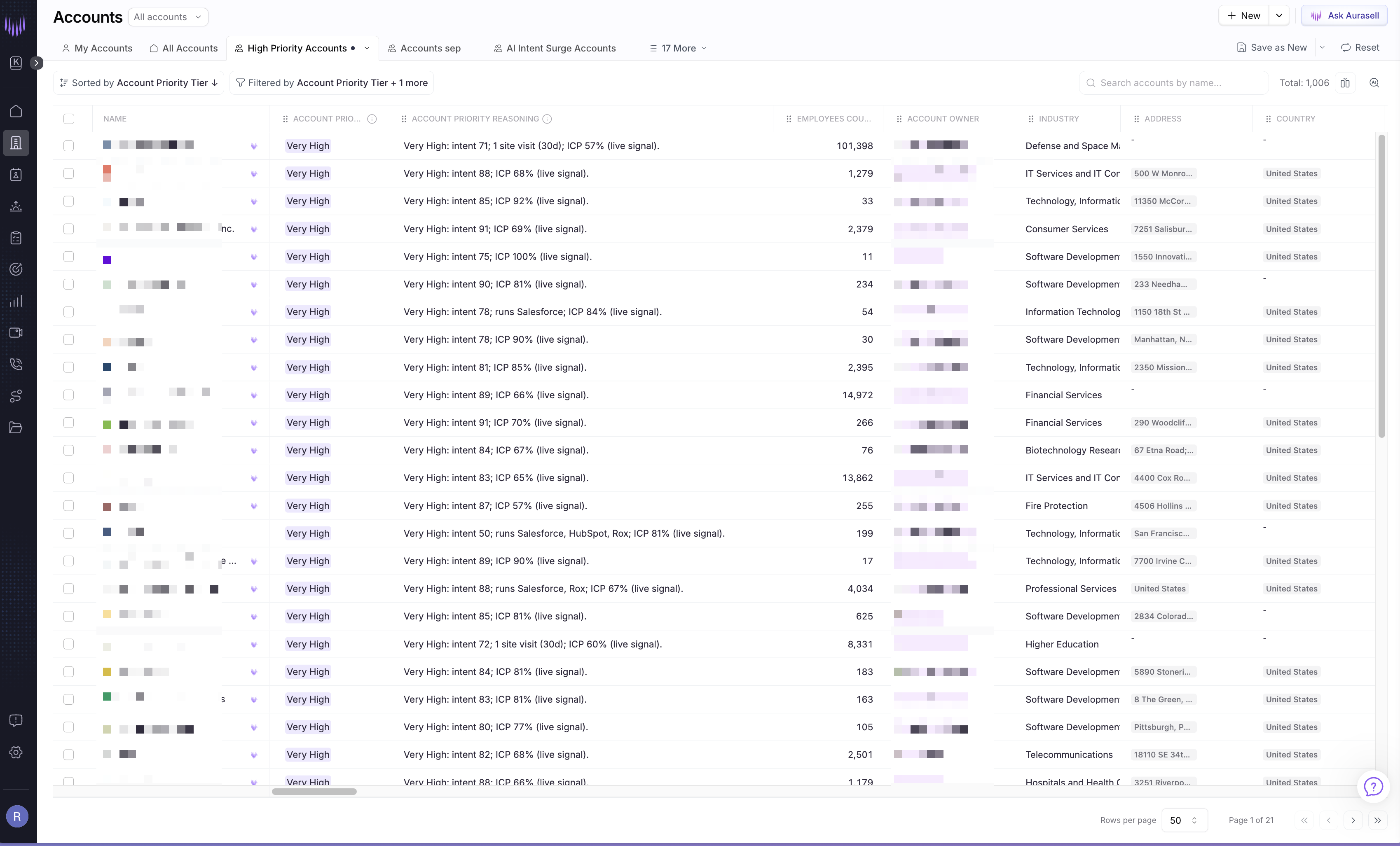
My first version had priority columns with values such as Very High, High, Medium, and Low. But reps couldn’t see why a record had received its tier.
So I went back to both agents and asked:
Create and register a new reasoning field. Keep the text very short, but explain why you gave the account or contact its priority.
That made the output much more useful:
You don’t have to anticipate everything before launch. Build a useful first version, see what people need when they use it, and return to the builder to add or refine it.
7. Be clear about what each ranking means
One intentional choice in my setup was allowing a Low account to contain a High contact.
The contact agent surfaces promising follow-ups even when the account agent was steering people toward fresh accounts.
Your team might prefer the rankings to align more closely. What matters is explaining what each agent is helping people decide.
Start with your team’s judgment, use the builder to make it concrete, and check the results against real records. You can keep improving the logic as you learn.